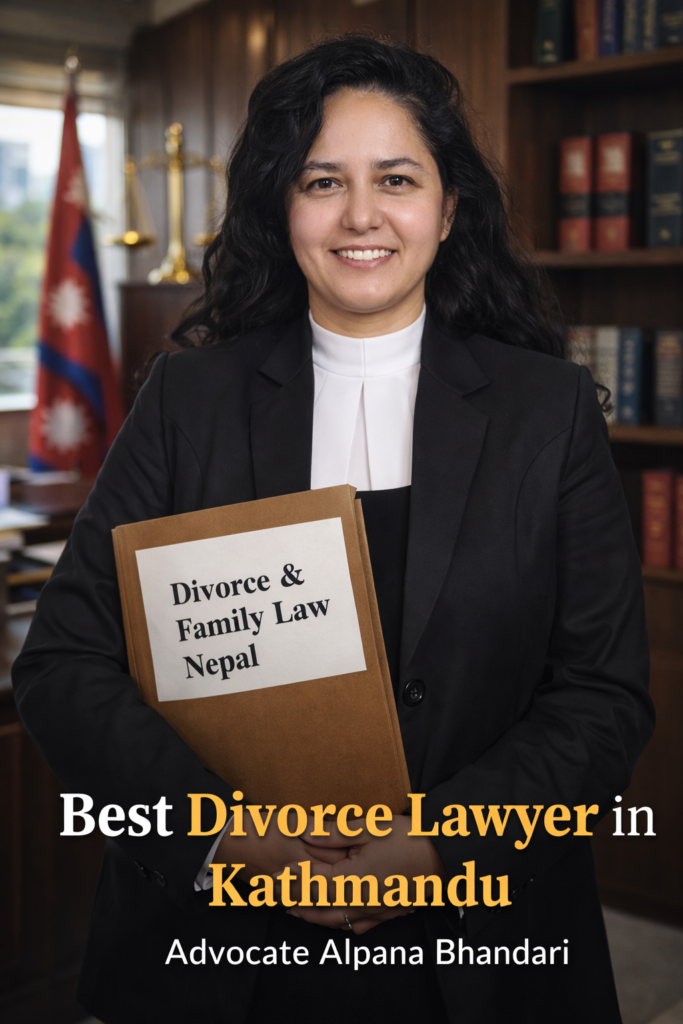
Ms. Advocate Alpana Bhandari is the CEO of Divorce Lawyer Nepal. She focuses her practice on all elements of family law, including divorce, custody, and property division. She advises prospective clients on, among other things, foreign direct investment (FDI), planned investments, joint ventures, and corporate and individual legal counsel on business establishment, business purchase, sales, contract review, contract drafting, share transfer, and company agreements.
Alimony is one of the most critical aspects of divorce in Nepal. This complete 2026 guide by Advocate Alpana Bhandari explains alimony laws, eligibility, calculation, court procedures, and rights of spouses under Nepalese law
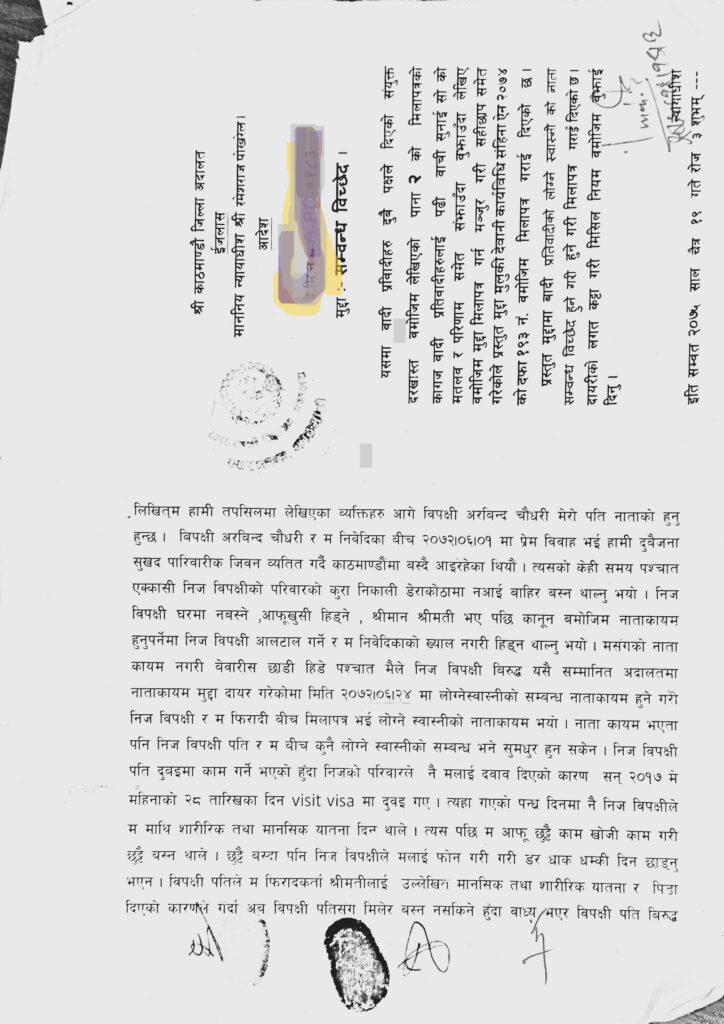
The divorce process in Kathmandu is governed by Nepal’s Civil Code and is handled primarily through the Kathmandu District Court. A divorce may be filed either by mutual consent or as a contested case, depending on the circumstances of the spouses. The process begins with the submission of a formal divorce application, along with required documents such as marriage registration certificates, citizenship copies, and details of children and property, if applicable.In mutual consent divorces, the court procedure is comparatively faster and less complex, often concluding after mandatory hearings and reconciliation attempts. Contested divorces involve legal arguments, evidence submission, and multiple court dates, especially in matters relating to child custody, alimony, and property division. For Nepalis living abroad, divorce can also be initiated through a legally executed power of attorney. Proper legal guidance from an experienced divorce lawyer in Kathmandu Advocate Alpana Bhandari ensures compliance with court procedures, protects individual rights, and helps achieve a timely and lawful resolution